
Racket Feelings in Transactional Analysis, With Examples
By the Dandelion Reflect team
Last updated:
What racket feelings are in transactional analysis: the cover-up feelings we learned as children, how they differ from real feelings, and trading stamps.
TL;DR: In transactional analysis (TA), a racket feeling is a familiar feeling that a person falls into again and again, often in place of a feeling that wasn't welcome in their family when they were small. Fanita English called this the substitution factor: anger can stand in for fear, cheerfulness for sadness, worry for anger. Racket feelings are felt for real. They just don't fit the situation, and they don't help solve it. Eric Berne added the idea of trading stamps: saving up bad feelings and later "cashing them in" for an outburst, a sulk or a walk-out.
Some feelings arrive so reliably that they start to feel like part of who you are. You always end up guilty, or always irritated, or always smiling when something has gone wrong. TA has a name for this: a racket feeling. This lesson covers what a racket is, Fanita English's idea that one feeling can stand in for another, the authentic feelings underneath, common substitutions, Berne's trading stamps, and how rackets connect to games and scripts. If TA is new to you, start with what transactional analysis is.
What Is a Racket Feeling in Transactional Analysis?
Berne used "racket" for a feeling that a person turns on again and again, whatever is happening. In What Do You Say After You Say Hello? (1972) he defined it as "a feeling, out of all the possible feelings, that is habitually turned on by a given person", and he argued that each one "has been learned, or rather decided upon, in early childhood" (Berne, 1972, p. 139, quoted in English, 1996).
He also described where the learning happens. "When the patient is young, his parents teach him how to feel when things get difficult," he wrote, and he gave the family rule a voice: "In our family, when things get difficult, we feel guilty (afraid, hurt, angry, inadequate, baffled)" (Berne, 1966, p. 286).
Put together, a racket feeling has a few marks:
- It is familiar. It shows up across many different situations, at home, at work, with friends.
- It was learned. It is the feeling that was allowed, modelled or rewarded in the family.
- It doesn't fit the moment. It belongs more to the past than to what is happening now.
- It doesn't solve anything. The problem is still there when the feeling has passed.
Some TA writers keep "racket" for the whole pattern of behaviour and "racket feeling" for the feeling it delivers. Either way, "racket" sounds like a con, and English disliked the label. In German she used Ersatzgefühle, "substitute feelings", which puts her definition into the name (English, 1996). The person in a racket really does feel it; the feeling is simply standing in for a different one.
Fanita English and the Substitution Factor
Berne tended to treat rackets as something to confront and move past. English, a psychoanalytically trained therapist who knew Berne and argued with him about rackets, thought this missed the point. She later wrote that "it was demeaning to label as rackets feelings that patients claimed they experienced", and that the useful questions were what lay behind the racket, where it came from, and why people kept returning to it (English, 1996).
Her answer, in a two-part article called "Rackets and Real Feelings" (English, 1971; English, 1972), was the substitution factor:
- A small child notices which feelings bring warmth and attention and which bring disapproval or silence.
- The child learns to switch, often without knowing, from the unwelcome feeling to a permitted one.
- In adult life the permitted feeling still arrives first, so the original feeling is hard to reach, even for the person feeling it.
English first placed this learning at around two to four years old. Later she added that feelings can also be pushed down at later stages of development, and that rackets can stand in for behaviours, attitudes and ideas as well as feelings. Drivers such as "Be Strong", for example, can work as rackets (English, 1996). The guide to transactional analysis drivers covers those.
Authentic Feelings: What the Racket Covers
TA writers often list five authentic, or natural, feelings: fear, anger, sadness, joy and affection (Costa, 2018). In everyday teaching the first four are often shortened to scared, mad, sad and glad.
Each authentic feeling fits a kind of situation and points towards something useful:
- Anger fits something wrong happening now. It gives energy to say no, protect yourself or change what is going on.
- Fear fits a danger ahead. It helps you get ready or get safe.
- Sadness fits a loss. It lets you grieve and accept comfort.
- Joy fits something good. It lets you take it in and share it.
Once it has been felt and acted on, an authentic feeling tends to pass. A racket feeling tends to repeat, because whatever needed attention never got it.
Common Racket Substitutions, With Examples
English named "substitutions of fear for anger or anger for sadness" as some of the easier ones to spot (English, 1996). Here are some patterns people often recognise. The examples are made up.
- Anger covering fear. A father snaps at his teenage son for coming home late. Underneath was an hour of fear that something had happened. In a family where fear counted as weakness, anger is the only version that comes out.
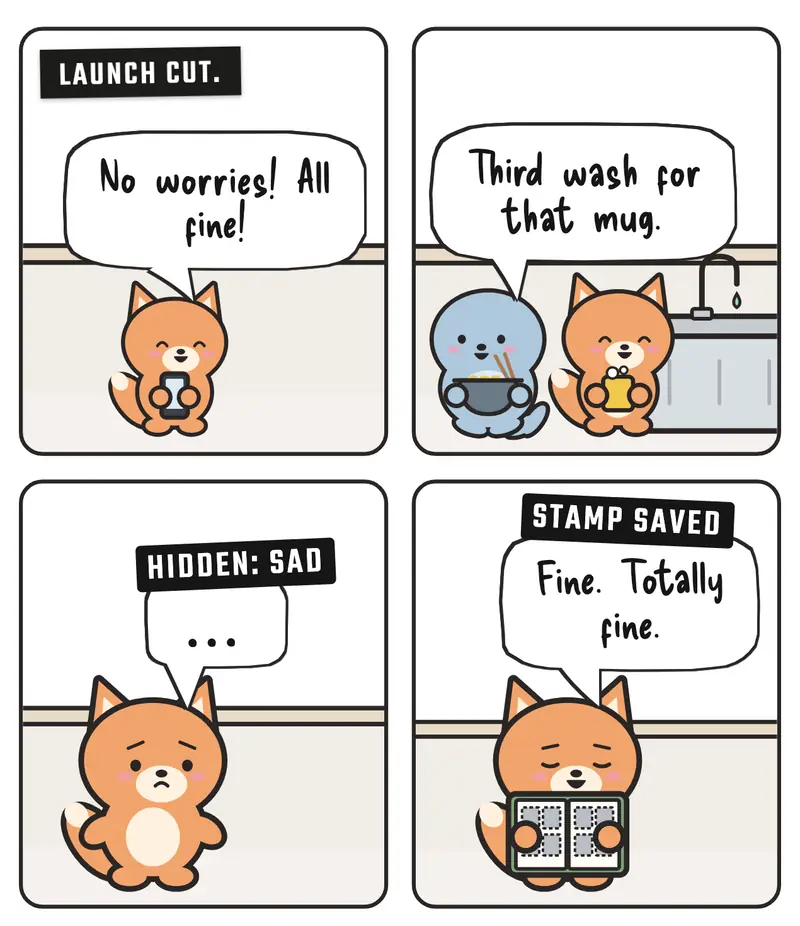
- Cheerfulness covering sadness. Someone's project is cancelled after months of work, and they say "No worries, honestly it's fine!" and offer to help with the next one. Their family prized being "the easy one", so being visibly sad never felt safe.
- Anxiety covering anger. A daughter-in-law feels a knot of worry every time a relative rearranges her kitchen. If she grew up where girls weren't allowed to be angry, worry is the permitted version.
- Guilt covering anger. Someone turns down a friend's request, then spends the evening feeling guilty, when the honest feeling was irritation at being asked yet again.
- Hurt or confusion covering anger. Some people go quiet and wounded, or suddenly "can't think", at exactly the moment anger would be the fitting response.
Two cautions. First, the same feeling can be authentic one day and a racket the next. Anger at a real injustice is not a racket just because anger happens to be your usual feeling. Second, no one can tell from outside what you "really" feel. These are patterns to wonder about, not labels to hand out.
Trading Stamps: Collecting and Cashing In
In the 1950s and 1960s, American shoppers collected trading stamps with their groceries, stuck them in books, and traded full books for prizes. Berne borrowed the image. He first wrote about psychological trading stamps in a short 1964 note, and he set out the idea more fully in Principles of Group Treatment (1966).
In his account, "transactional trading stamps are the currency" of rackets (Berne, 1966, p. 286). When a racket feeling comes up and isn't expressed, it can be stored as a stamp instead. Some of the details:
- Stamps come in colours. Berne wrote of red stamps for anger, brown stamps for guilt, and "gold stamps" for affectionate or admiring strokes. People who save one colour often ignore the others, and a dedicated collector of red stamps may actively turn down gold ones (Berne, 1966, p. 288).
- They are collected on the side. Like paper stamps, they come "in the course of buying 'groceries'", as a by-product of ordinary dealings, while some part of the person is watching for the next one (Berne, 1966, p. 288).
- A full book gets cashed in. One book might buy a "little" prize, such as a free drunk. A hundred books might buy a big one, such as quitting a job, leaving therapy or a divorce, with the feeling that nobody could blame you (Berne, 1966, p. 287).
- Some stamps are counterfeit. When no one provides a provocation, a person can imagine one (Berne, 1966, pp. 287-288).
Berne told of a patient who explained the idea to her 12-year-old son. He came back with a homemade stamp book that read "This page when full of stamps entitles you to one free suffer" (Berne, 1966, p. 287).
A familiar everyday version: someone says nothing for months while a colleague takes credit for their work, then one small comment in a meeting sets off an explosion that surprises everyone, including them. In Berne's terms, a full book has just been cashed in.
Berne also listed drastic and dangerous prizes at the far end, including harm to oneself or others. If thoughts of hurting yourself or someone else are around for you, please talk to someone now. In India, Tele-MANAS (14416 or 1-800-891-4416) is the government's free tele-mental health line, open 24x7, and 112 is the emergency number. Outside India, contact your local emergency number.
For Berne, getting better meant throwing the old stamps away, and either stopping collecting or starting to collect gold ones, though he admitted that "few collectors of trading stamps are willing to throw them away" (Berne, 1966, p. 288).
How Rackets Connect to Games and Scripts
Rackets rarely appear alone. Berne wrote that feelings become rackets when a person learns to "collect them in his games and script" (Berne, 1966, p. 286).
- Games. The familiar bad feeling at the end of a psychological game is usually the racket feeling, and it often doubles as a stamp.
- Racketeering. English added the word "racketeering" for transactions that seek strokes in support of a racket (English, 1996). Two people can keep each other's rackets going for years, and she linked this to the roles of the drama triangle.
- Scripts. Each time the familiar feeling arrives, it seems to confirm an old belief about yourself and other people, which keeps the life script on its track.
Lesson 16 of the TA 101 course, on the racket system, follows that loop through belief, behaviour and memory.
How Therapy Works With Racket Feelings
In TA therapy, the work usually starts with a contract about what you want to change, and rackets often come into view along the way. The work might include:
- Noticing the familiar feeling. When does it arrive, and how quickly? Does the situation call for it?
- Tracing the family rule. Which feelings were welcome at home, and which led to disapproval, worry or silence?
- Getting to the feeling underneath, slowly. This is done at a pace that feels safe, with the therapist's protection. The guide to permission, protection and potency explains why safety comes first.
- Expressing feelings when they happen, so there are fewer stamps to save.
English noted that some rackets ease when they are confronted within the therapy relationship, even before the underlying feeling is found. Others keep returning until the person can name what lies underneath and bring it into the open (English, 1996). For more on making room for difficult feelings, see emotional regulation therapy. The page on Transactional Analysis therapy describes what TA therapy involves.
Reflective Questions, Not a Quiz
There is no score here. Notice which questions you'd rather skip.
- When things go wrong, which feeling usually turns up first?
- Which feelings are easier for you to show these days, and which are harder?
- Is there a feeling you almost never let yourself have?
- What do you tend to save up, and what do you usually "cash in" for?
- When did a reaction of yours surprise you with its size?
- Who in your life gets your gold stamps, and do you accept theirs?
Frequently Asked Questions
What is a racket feeling in TA?
A racket feeling is a familiar feeling a person returns to again and again, across many situations, which was learned in childhood as the acceptable feeling to have. Eric Berne defined a racket as "a feeling, out of all the possible feelings, that is habitually turned on by a given person." It doesn't fit the present situation and doesn't help solve it.
What is the difference between a racket feeling and an authentic feeling?
An authentic feeling fits what is happening now and points towards something useful. Anger helps you protect yourself, fear helps you get safe, sadness helps you grieve and joy helps you take in something good. A racket feeling is a familiar substitute, often for a feeling that wasn't welcome in childhood, and it tends to repeat without changing anything.
What are trading stamps in transactional analysis?
Trading stamps are Berne's image for bad feelings that are saved up instead of expressed. Each unexpressed racket feeling is a stamp, and when enough have been collected, the person feels entitled to "cash them in" for a prize, such as an outburst, a binge or a walk-out, which feels justified because of everything saved up before.
Are racket feelings fake?
No. Racket feelings are felt for real. Fanita English argued that dismissing them as phony was demeaning to the people having them. The word "racket" means the feeling is standing in for another one, often a feeling that was off-limits in childhood, not that the person is pretending.
If you keep landing in the same feeling whatever happens, a free 15-minute intro call is a low-pressure place to talk it through.
Sources
- English F. The substitution factor: rackets and real feelings. Transactional Analysis Journal. 1971;1(4):27-32.
- English F. Rackets and real feelings, part II. Transactional Analysis Journal. 1972;2(1):23-25.
- English F. Berne, phobia, episcripts, and racketeering. Transactional Analysis Journal. 1996;26(2):122-131.
- Berne E. Principles of Group Treatment. Oxford University Press; 1966. Trading stamps, pp. 286-288; rackets, pp. 308-309.
- Berne E. What Do You Say After You Say Hello? The Psychology of Human Destiny. Grove Press; 1972. Definition of a racket, p. 139, as quoted in English (1996).
- Costa JMP. About sensations, emotions and feelings: a contribution to the theoretical basis of transactional analysis. International Journal of Transactional Analysis Research & Practice. 2018;9(1):43-51.
Related writings
10 min read
The 3 Ps of TA: Permission, Protection and Potency
The 3 Ps of transactional analysis: what permission, protection and potency mean, who described them, how they work together and what they look like in therapy.
12 min read
Psychological Games in Transactional Analysis: 10 Examples
Psychological games in transactional analysis: Berne's definition, Formula G, the three degrees of games and 10 games people play, with examples and ways out.
11 min read
Life Scripts in Transactional Analysis and the Script Matrix
What a life script is in transactional analysis: Berne's idea, Steiner's script matrix, winning and losing scripts, the six script types and how scripts change.
Talk to a therapist about this
One-to-one sessions where we work on the patterns behind what this post describes, at your pace.
Individual therapy online